UMAW’s Raise The Bar campaign aims to establish consistent standards for music venues
United Musicians and Allied Workers has started a new campaign to establish standard booking practices at music venues. They include:
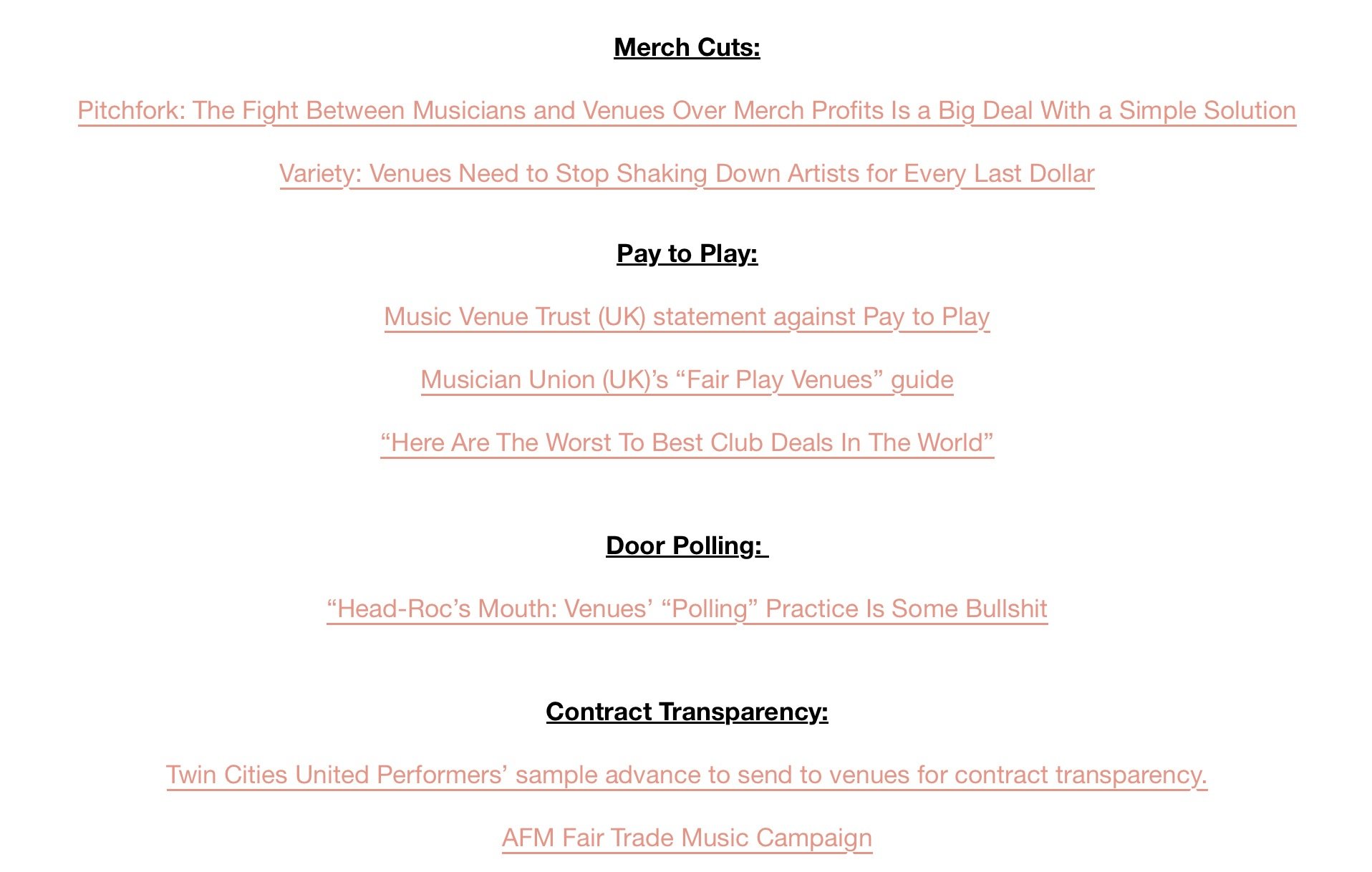
No Merch Cuts
A “merch cut” is where a venue demands an artist pay them a certain percentage of merch sales for the night, in order to be booked at the venue. This fee can sometimes be more than 30% of the top-line revenue the merch table generates. Because artist merchandise is most often manufactured, transported, and sold at the expense of the artist, not the venue, such fees are increasingly viewed as a predatory and unfair business practice.
If the venue offers the artist the option of hiring a merch seller provided by the venue and the artist accepts, it’s not considered a merch cut. This offer must be completely voluntary, e.g. the artist is able to sell their own merch at no additional cost, but also has the option to choose to hire a venue-provided merch seller for a fee.
No Pay to Play
“Pay to Play” is the practice of venues or festivals charging artists a fee to perform. Artists provide musical services to venues, not the other way around, so they should always be paid fairly for that service, not charged for it. In no case is it appropriate for a venue to transfer all risk onto an artist by allowing a negative balance on the artists account for their performance services.
Pay to play is defined as:
A) Venues or festivals directly charging artists to perform.
B) Venues or festivals charging artists an application fee to perform.
C) Venues or festivals requiring artists to purchase tickets at the artists expense.
A “house costs” fee subtracted from an artist’s gross sales is not considered pay to play, but in no case should that balance turn negative and the artist owe an unrecouped balance back to the venue after a performance.
No Door Polling
“Door Polling” is the practice of a venue asking patrons which artist they’ve come to see at the door, and then adjusting payment to the artists based on those responses. All financial dealings must be transparent, negotiated at the time of booking, and adhered to throughout the transaction, not determined by door polling.
Contract Transparency
Any financial agreements between an artist and a venue should be transparent, stated clearly and finalized before the show is confirmed, and adhered to through final settlement at the end of a performance. Contract transparency means that:
A) All artists should receive clear payment terms before a booking is finalized, along with the method and time of payment.
B) Artists should receive a statement of any itemized expenses to be deducted from their final payment (if applicable).
C) The terms of the contact must be adhered to by both parties, with no unapproved changes, through final settlement after the performance has concluded.
How you can help
While these items may seem standard practice in many business environments, sadly in the live music industry they’re sometimes not adhered to. The Raise The Bar campaign aims to change that, with many venues of all sizes already signing on to show their support. If you’d like to support this action, here’s how.
Venues
If you’re a venue operator, sign up here to be added to the Raise The Bar directory of fair and transparent venues.
Artists
If you’re an artist, sign here to support the Raise The Bar campaign.
Everyone
If you’re a fan, use this UMAW-provided email template to email your local venues and ask them to Raise The Bar.
Resources and Further Reading
Interested in learning more about the live music industry, booking shows, and contract negotiations? UMAW’s provided a handy list of resources at their Raise The Bar campaign page.