When can you use someone else’s work?
One of the biggest social debates affecting artists right now boils down to two simple questions:
When exactly can you use someone else's work?
What exactly constitutes legal fair use in the age of AI?
Luckily, the US Copyright Office actually has some very clear current guidance on this, and they’ve published this in a handy resource called Sampling, Interpolations, Beat Stores and More: An Introduction for Musicians Using Preexisting Music.
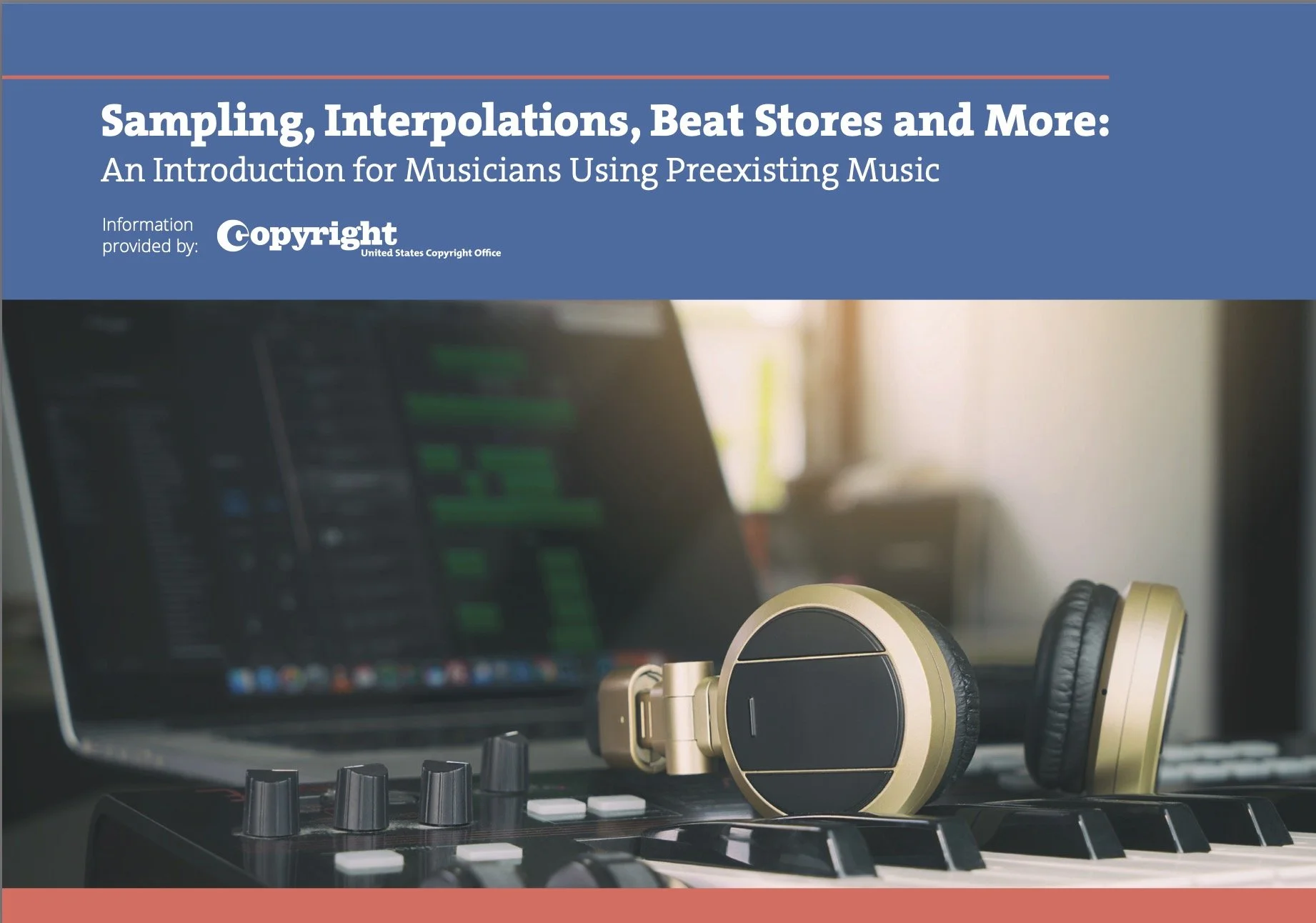
Sampling, Interpolations, Beat Stores and More from the US Copyright Office.
You can download this resource here.
It’s an 11 page brochure, and well worth the 7 minutes it’ll take to skim through, especially if you’re a musician who’s trying to earn income through licensing your music on beat stores or YouTube music libraries like Epidemic Sound.
Hint: there are a lot of predatory license libraries out there that abuse copyright, and (in my opinion) Epidemic Sound is absolutely one of them. This info will let you catch these types of bad actors before you sign the contract.
Fair Use Fact or Fiction
Here’s some highlights:
It’s always fair use if I sample seven seconds or less of a song.
FICTION! Because fair use is evaluated on a case- by-case basis, there is no formula to ensure that a predetermined percentage or amount of a work— or specific number of words, lines, pages, or copies— may be used without permission.
If I use a disclaimer that restates the fair use law or says “no copyright infringement intended,” then I cannot be found guilty of copyright infringement.
FICTION! Copyright infringement does not require proof of intent. These types of disclaimers are an Internet myth.
For even more information on fair use, check out the US Copyright Office Fair Use FAQ.