
Reviewing Mood Machine, Part 2
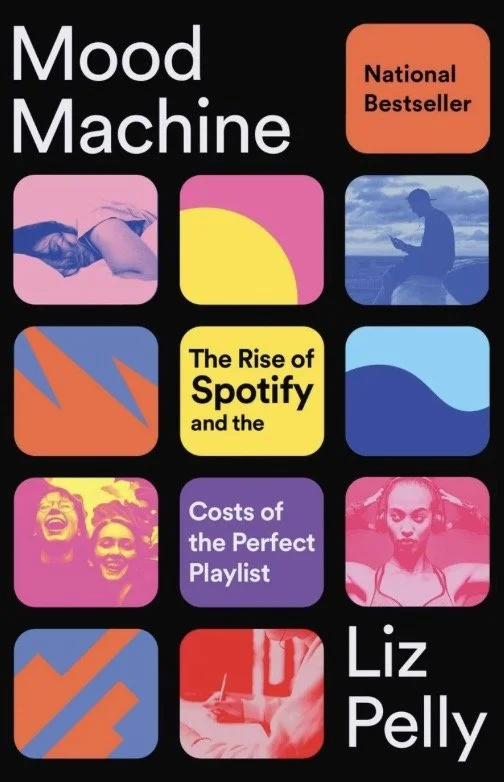
Mood Machine: The Rise of Spotify and the Costs of the Perfect Playlist is a thoroughly researched and thoughtfully presented history of the effects digital technologies have had on our ability to experience human-made arts and culture.
It’s a must-read for anyone who loves music, and highly recommended!
Instead of a traditional review of this book, I’m pulling notable quotes from each chapter and letting them speak for themselves.
You can buy Mood Machine here (not an affiliate link).
Chapter 1: The Bureau of Piracy
This chapter details the mainstreaming of global music piracy and the digital music revolution in the 1990s-early 2000’s, following the rise and fall of Napster. Details include Sweden’s government-funded Internet access as a social project, Pirate Bay and the growth of peer-to-peer file sharing, torrenting, and eventually digital music streaming. Inside of this rapidly changing digital landscape, new models of monetizing a new digital sharing economy begin to emerge.
“Daniel Ek and Martin Lorentzon were advertising dudes who wanted to sell more advertising and realized that music was cheap…If you start looking at Spotify as an advertising company rather than a culture company, a lot of things make more sense.”
Chapter 2: “Saving” the Music Industry
This chapter lays the background on Spotify’s two founders (Daniel Ek and Martin Lorentzon), describes the beginnings of the company, and details its initial effects on major music labels and independent musicians.
Both of Spotify’s founders were advertisers by trade: Daniel Ek got his start as a tech entrepreneur who sold his adtech company Advertigo for $1.3M at age 23, after which he promptly bought a Ferrari. Martin Lorentzon founded Tradedoubler, an automated banner ad and affiliate marketing sales tech company, in 1999: he was one of the inventors of banner ads on websites. What an achievement.
“Ultimately, that’s what music was to Spotify in its early days: a traffic source for its advertising product”.
“It wasn’t even clear back then that we were going to do music at all…initial conversations were around building a video streaming service.”
“The benchmark we set for ourselves wasn’t existing music services. It was the file-sharing networks….That’s what we saw as our competition….We didn’t mind piracy particularly.”
“As the engineers built Spotify’s demo version, in lieu of licensed music…they instead filled the platform with tracks culled from their own personal music libraries, including many downloaded from the Pirate Bay.”
“What Spotify had really done was engineer a frictionless experience: the sense that the music just materialized from thin air. But, similar to other app-enabled magic tricks of recent history, such as overnight packages and instant food delivery, frictionless is always an illusion.”
“Spotify kept pushing the discovery angle, so we thought, okay, this is going to be perfect for independent music…we didn’t know that nobody was going to make any money off of it. And that was before everybody knew that the majors were the puppet master behind the scenes.”
“Spotify had not even launched in the U.S. yet, and it was already becoming clear that saving the major record labels was not exactly the same as saving music.”
You can buy Mood Machine here.